Astronomy News
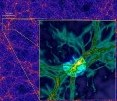 Distant
quasar shows up gross error in standard cosmological model Distant
quasar shows up gross error in standard cosmological model
Astronomers have discovered a distant quasar illuminating a vast nebula
of diffuse gas, containing far more normal matter than predicted by the
current cosmological model. Researchers at the University of California
led the study, published in Nature. 20 Jan 2014
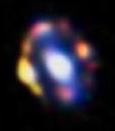 Remote
gravitational lens casts shadow over theory of galaxy evolution Remote
gravitational lens casts shadow over theory of galaxy evolution
The discovery of the most distant gravitational lens — a galaxy that
intensifies the light of an even more distant object — poses a mystery
that could challenge current ideas of how galaxies formed. 24 Nov 2013
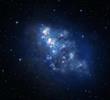 Astronomers
discover most distant known galaxy Astronomers
discover most distant known galaxy
A team of astronomers has
discovered a galaxy at a distance of 13.1 billion light years and a
redshift of 7.5, and it is surprisingly evolved for such a short time
after the big bang, posing problems for theorists. 23 Nov 2013
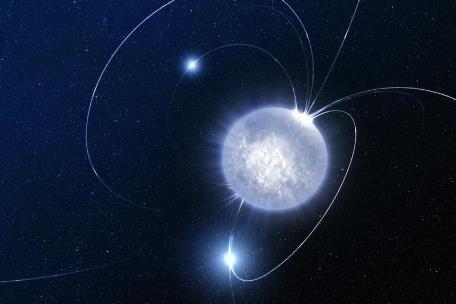 Super-bright supernovae may be powered by Magnetars Super-bright supernovae may be powered by Magnetars
New light has been shed on the rarest and brightest exploding stars ever
discovered in the universe. Research proposes that super-luminous supernovae are powered
by small and incredibly dense neutron stars called magnetars. 23 Nov
2013
 Hope
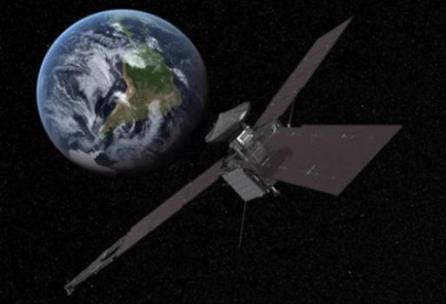
for astronomers stumped by 'flyby anomoly' Hope
for astronomers stumped by 'flyby anomoly'
A mystery that has
stumped scientists for decades might be one step closer to solution
after ESA tracking stations carefully recorded signals from the Juno
spacecraft as it swung by Earth. 23 Nov 2013
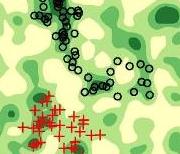 Biggest structure in the universe challenges modern cosmology Biggest structure in the universe challenges modern cosmology
An international team of astronomers, led by academics from the
University of Central Lancashire, has found the largest known structure
in the universe. This large quasar group (LQG) is some 4 billion years
across and not predicted by modern theory. 7 Feb 2013
Earliest spiral galaxy ever seen 'should
not exist'
Astronomers have discovered a spiral galaxy in the
early universe, billions of years before spiral galaxies should have
formed. Astronomers discovered it while studying the properties of about
300 very distant galaxies in the early universe using the Hubble Space
Telescope. 13 Dec 2012
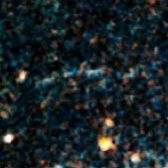 'Impossible' galactic arc threatens age of
universe 'Impossible' galactic arc threatens age of
universe
Astronomers using the Hubble Space Telescope have found
a puzzling arc of light behind an extremely massive cluster of galaxies
that are 10 billion light-years away. The trouble is an arc at that distance and age
shouldn't exist. 1 July 2012
More news >>
E-book
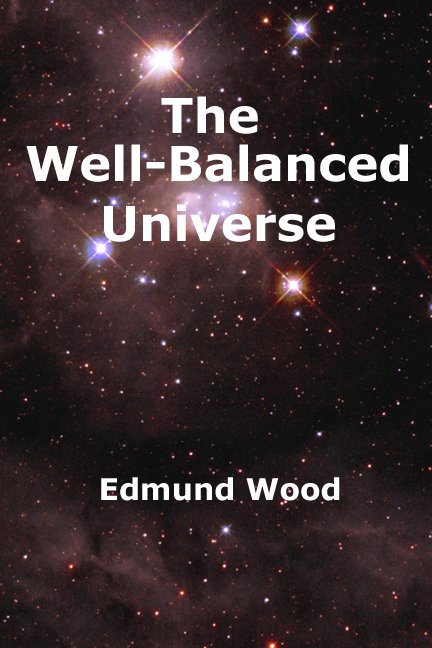 |
The Well-Balanced Universe
A Revolutionary Explanation of the
Cosmos
by Edmund Wood
This is an e-book in PDF format.
Gravity is just one of many
different forms of energy. This fact alone implies that the
balance and flow of energy throughout the universe are even more
fundamental in the whole scheme of things. Consequently, the
procedure adopted in the book is to start with the law of energy
flow (otherwise known as the second law of thermodynamics)
rather than the law of gravity... Read
the Overview >>
|
Popular book
The
Wonders of the Universe by Prof Brian Cox. Full of magnificent shots
of him wearing anoraks and T-shirts in wonderful places around the
world.
to top
|